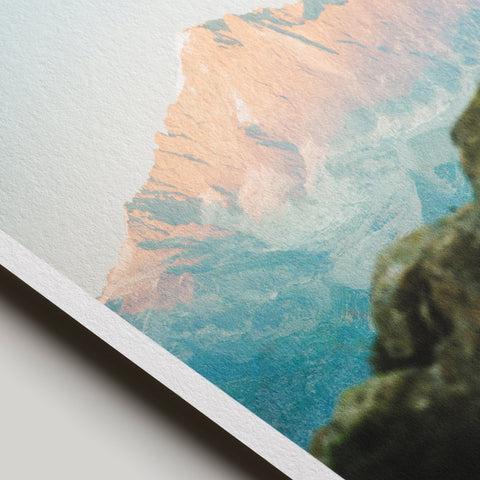
Giclee Printing
Giclée printing is a form of high-quality inkjet printing that has become increasingly popular over the last 20–30 years, particularly within fine art photography and printmaking.
The term Giclée comes from the French word gicler, meaning “to spray”. It refers to the way ink is precisely deposited onto the paper. The process itself has been around since the 1980s, although the technology has developed significantly since then.
Rather than using traditional photographic chemistry, Giclée printing uses pigment-based inks. Tiny droplets of ink are precisely placed onto the surface of the paper, allowing the printer to reproduce an extremely wide range of colours, tones and fine detail.
Giclée prints can be made onto a wide variety of fine art papers, including cotton, alpha-cellulose and baryta papers, as well as other specialist surfaces such as canvas. The choice of paper can have a significant effect on the appearance of the finished image.
High-quality pigment inks and archival fine art papers can also provide excellent long-term stability when the print is produced, displayed and stored correctly.